
Agricultural performance is often measured by a simple question: how much can a crop produce?
Yet under increasingly variable growing conditions, another question is becoming just as important: how reliably can that performance be maintained?
For growers and businesses connected to agricultural production, variability affects more than final yield. It can influence farm income, production planning, product availability and confidence across the supply chain.
Crop resilience is therefore becoming both an agronomic and a commercial priority.
Climate variability changes the risk equation
Crop production depends directly on temperature, water availability and environmental conditions during critical developmental stages.
Drought, heat, frost or irregular rainfall can influence flowering, fruit set, vegetative development and final yield. But production losses do not occur only after extreme events.
A crop may experience moderate water stress during flowering, followed by high temperatures during fruit development and another period of limited water availability later in the season. Each episode may appear manageable individually, yet their effects can accumulate across the production cycle.
Timing is particularly important. Stress during flowering, fruit set, rapid fruit development or grain filling can affect processes that contribute directly to the final harvest.
This makes resilience relevant even in seasons without a single catastrophic event.
Peak yield and reliable performance are different objectives
Agricultural inputs are frequently evaluated by their ability to increase yield.
More kilograms per hectare, greater fruit weight or improved fruit set are valuable indicators. However, they describe performance under a particular combination of crop, management and environmental conditions.
Reliable performance addresses a different objective.
A crop may achieve very high production under favourable conditions while responding strongly when water or temperature conditions move away from the optimum. From a business perspective, a slightly lower production ceiling accompanied by greater consistency may sometimes be as important as maximising peak yield.
The challenge is therefore not only to increase production potential, but also to support crops when growing conditions become more demanding.
Where biostimulants can contribute
Plant biostimulants are not substitutes for irrigation, balanced nutrition, suitable genetics or sound crop management. Their role is complementary.
Protein hydrolysates and amino acid-based biostimulants have been studied in relation to processes such as nutrient assimilation, root development, photosynthetic activity and plant responses to environmental stress.
However, the outcome of an application can vary considerably according to crop, variety, environmental conditions, dose and timing.
This makes a generic question such as “Do biostimulants increase resilience?” less useful than a more specific one:
Which solution, for which crop, at which physiological stage and under which conditions?
What field trials actually tell us
Field trials are important because they evaluate plant responses under defined agricultural conditions. Their value, however, depends on how the results are interpreted.
In a 2019 field trial on Hayward kiwi in Imathia, Amino16 was applied five times at specific developmental stages. The treated section recorded an average yield of 28.24 kg per tree compared with 20.42 kg per tree in untreated control. Within that particular trial, the difference was mainly associated with increased fruit set.
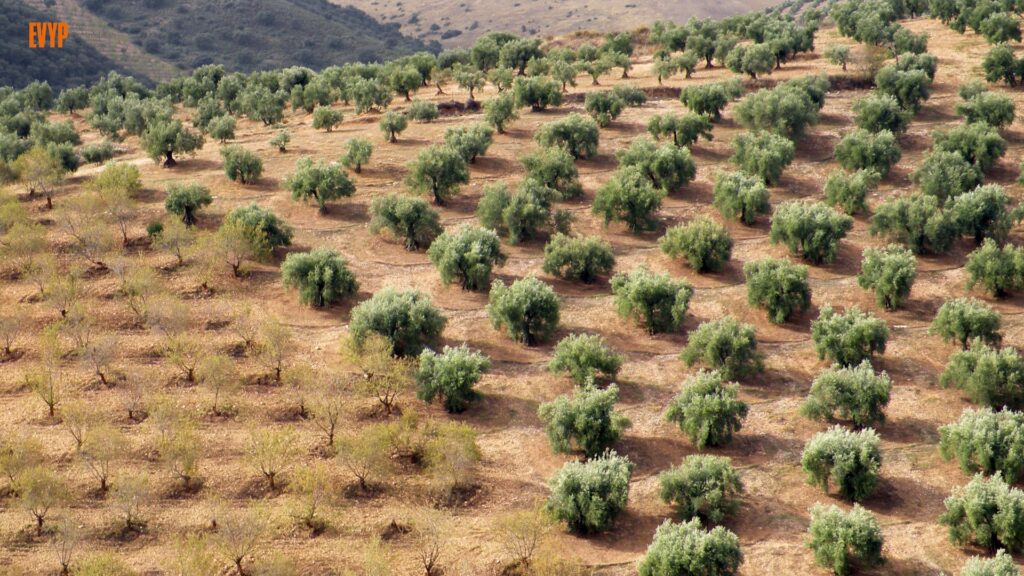
Olive trials within EVYP’s research portfolio provide another example. In trials conducted in 2017, statistically significant increases in fruiting were recorded despite severe drought conditions during the season. Earlier olive work also indicated that application timing influenced the observed response.
Other trials highlight why generalisation should be avoided. In avocado, responses differed between Hass and Fuerte, while several positive trends didn’t clear the statistical bar.
Biology is messy, and anyone promising a one-size-fits-all fix is selling you a fairy tale.
A good trial shows what’s possible under real-world conditions—not a blank check for every field, farm, or season.
EVYP’s crop-specific approach
This principle is reflected in EVYP’s approach to plant biostimulation.
Rather than applying a single protocol across all crops, application strategies are adapted to crop physiology and developmental stage.
In kiwi, for example, application programmes distinguish between first leaf emergence, pre-flowering, petal fall, rapid fruit development and post-harvest periods.
Olive programmes similarly differentiate between winter application, pre-flowering, stone hardening, periods of intense heat or drought, and post-harvest management.
The reasoning is straightforward: the physiological needs and vulnerabilities of a crop change throughout the season, so application timing must be connected to application purpose.
From production potential to production resilience
As growing conditions become more variable, agricultural technologies will increasingly need to be evaluated on more than their ability to raise yield under favourable conditions.
The question is also how effectively they can support crop performance when environmental conditions become more demanding.
Biostimulants can form part of that broader resilience strategy when product selection, dosage and timing are matched to crop physiology and actual production conditions.
For modern agriculture, the objective is not certainty. It is better preparation for variability.

